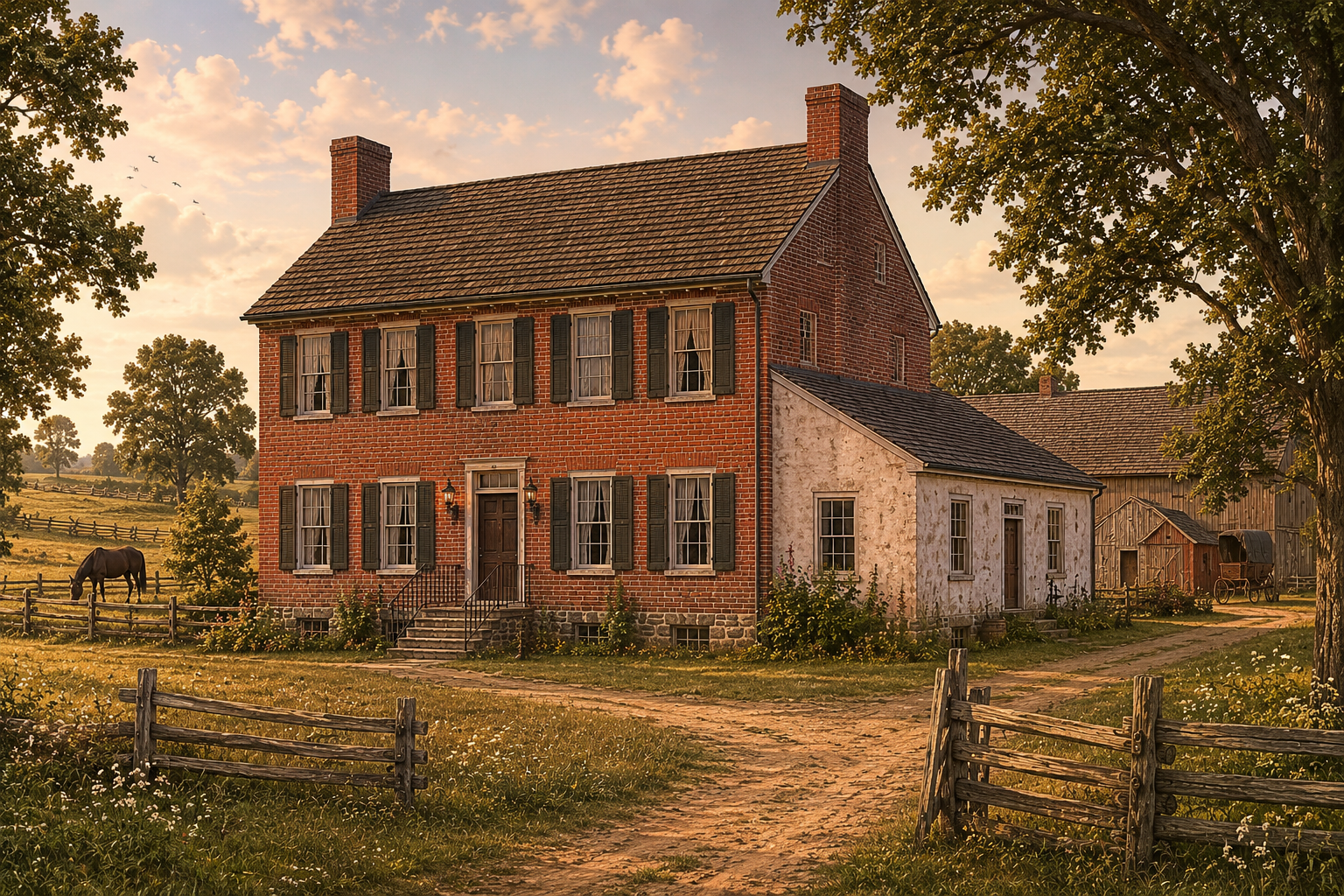
The 1812 Baladerry Inn farmhouse at golden hour

Est. 1812

The History of the 1812 Baladerry Inn

The story of a farmhouse, a field hospital, and a living monument on the edge of the Gettysburg Battlefield.

Nestled on the edge of the historic Gettysburg Battlefield in Gettysburg, Pennsylvania, the Baladerry Inn is one of the area's most treasured historic properties. Originally built in 1812, the inn began as part of the George Bushman family farm, serving as a working agricultural homestead surrounded by orchards and fertile farmland. The original brick farmhouse reflected the simple Federal architectural style common in rural Pennsylvania during the early nineteenth century.

As the Bushman family expanded their farm, additions were made to the home around 1830, transforming it into a larger family residence. For decades, the property remained a peaceful farm where crops were grown and livestock was raised, contributing to the local agricultural economy of Adams County.

The Civil War Years

The inn's most significant historical chapter came during the Battle of Gettysburg in July 1863. Due to its close proximity to the battlefield, the Bushman farmhouse was converted into a field hospital for wounded Union soldiers. Surgeons worked tirelessly inside the home, performing emergency operations and treating countless casualties. The building's Great Room and other areas served as makeshift surgical wards, while wounded soldiers filled nearly every available space.

One of the most remarkable reminders of this period is a preserved bloody footprint that remains visible in what is now known as the Lincoln Parlor. Believed to have been left by a wounded soldier or medical staff member during the battle, it serves as a powerful symbol of the sacrifices made during one of America's most important conflicts.

Return to the Land

Following the Civil War, the property returned to its agricultural roots and remained a private farm for more than a century. Modern additions were constructed in 1972 and 1994, while carefully preserving the original 1812 structure. In 1992, the historic farmhouse was transformed into the Baladerry Inn, a bed-and-breakfast designed to offer guests both modern comfort and a connection to Gettysburg's rich history.

Today, the Baladerry Inn features beautifully restored guest rooms, many named after notable figures connected to the Battle of Gettysburg. Visitors enjoy elegant accommodations while experiencing a property that has witnessed over two centuries of American history. The inn remains known for its peaceful setting, exceptional hospitality, and careful preservation of its historic character.

More than simply a place to stay, the Baladerry Inn stands as a living monument to the past. From its beginnings as an early nineteenth-century farmhouse to its role as a Civil War field hospital and its present-day operation as one of Gettysburg's premier historic inns, the Baladerry Inn continues to preserve and share the stories of the people who lived, worked, and fought there.
A Stain That Time Could Not Erase

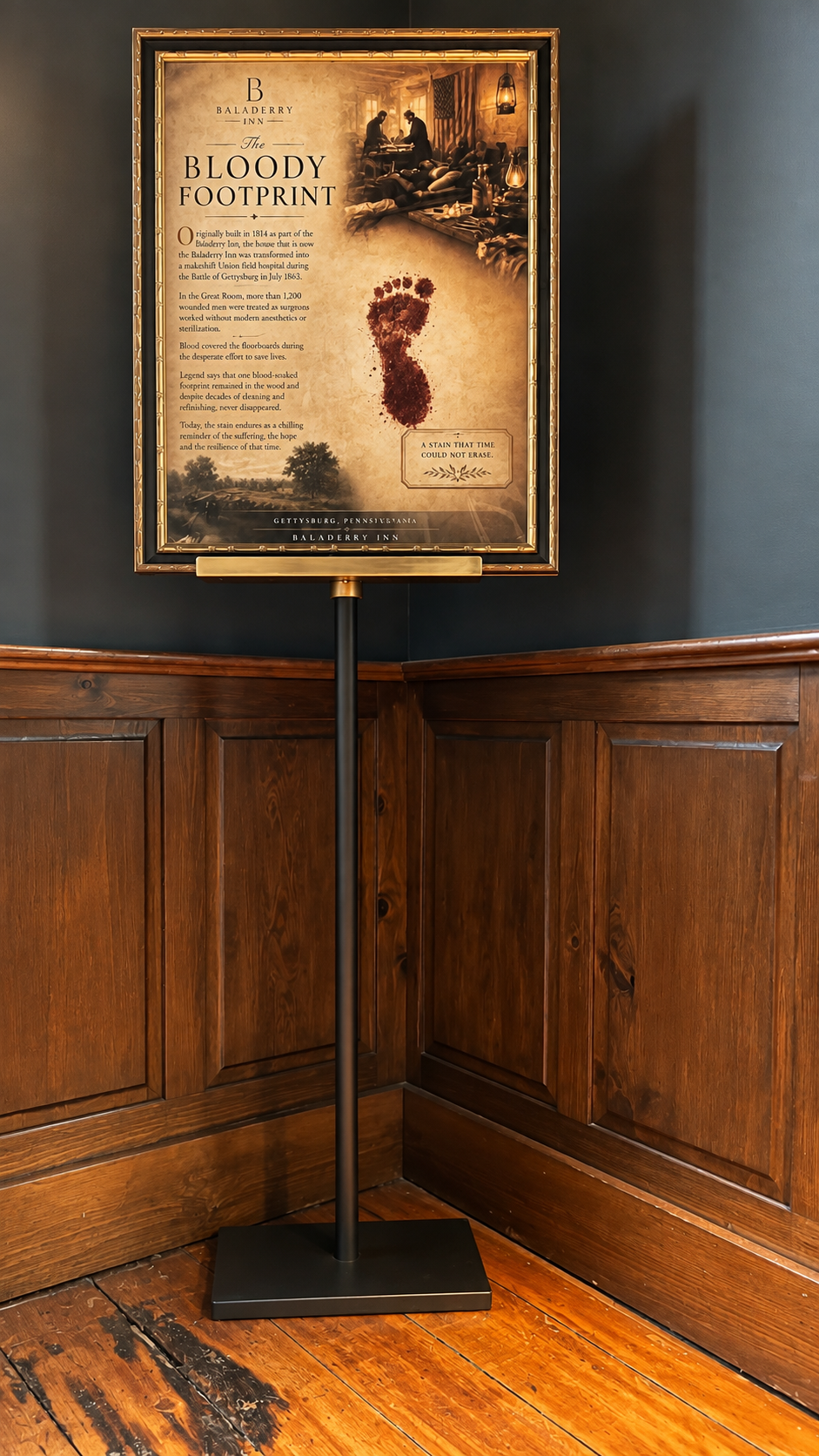
The Bloody Footprint

The Bloody Footprint placard displayed in the Baladerry Inn hallway
The Bloody Footprint — preserved in the original floorboards

When the fighting at Gettysburg ended in July 1863, the suffering did not. The Baladerry property became part of the enormous effort to care for the thousands of wounded soldiers left behind. More than 1,300 wounded men were treated in and around the property, transforming this peaceful farmstead into a place of emergency medicine, suffering, and survival.

Inside the home, rooms that had once served everyday family life became makeshift hospital spaces. Surgeons worked under extraordinarily difficult conditions, performing emergency operations and amputations in an attempt to save the lives of soldiers suffering from devastating battlefield wounds. Outside, the grounds surrounding the house were also used to care for the wounded as the sheer number of casualties overwhelmed available space.

Among the reminders of those days is what has become known as The Bloody Footprint — a dark, foot-shaped stain still visible in the original wood floor. Whether left by a wounded soldier, a surgeon, or someone moving through the house amid the chaos may never be known with certainty. But its presence offers a haunting connection to what occurred here.

Today, the footprint tells a story far larger than a single stain in the floor. It represents the carnage of battle and the human aftermath of Gettysburg — the wounded carried from the battlefield, the hurried surgeries, the amputations, and the countless acts of care performed in the desperate days that followed. More than 160 years later, it remains preserved at the Baladerry Inn as a tangible reminder of the people who suffered, served, and fought to survive within these walls.

Gettysburg, Pennsylvania
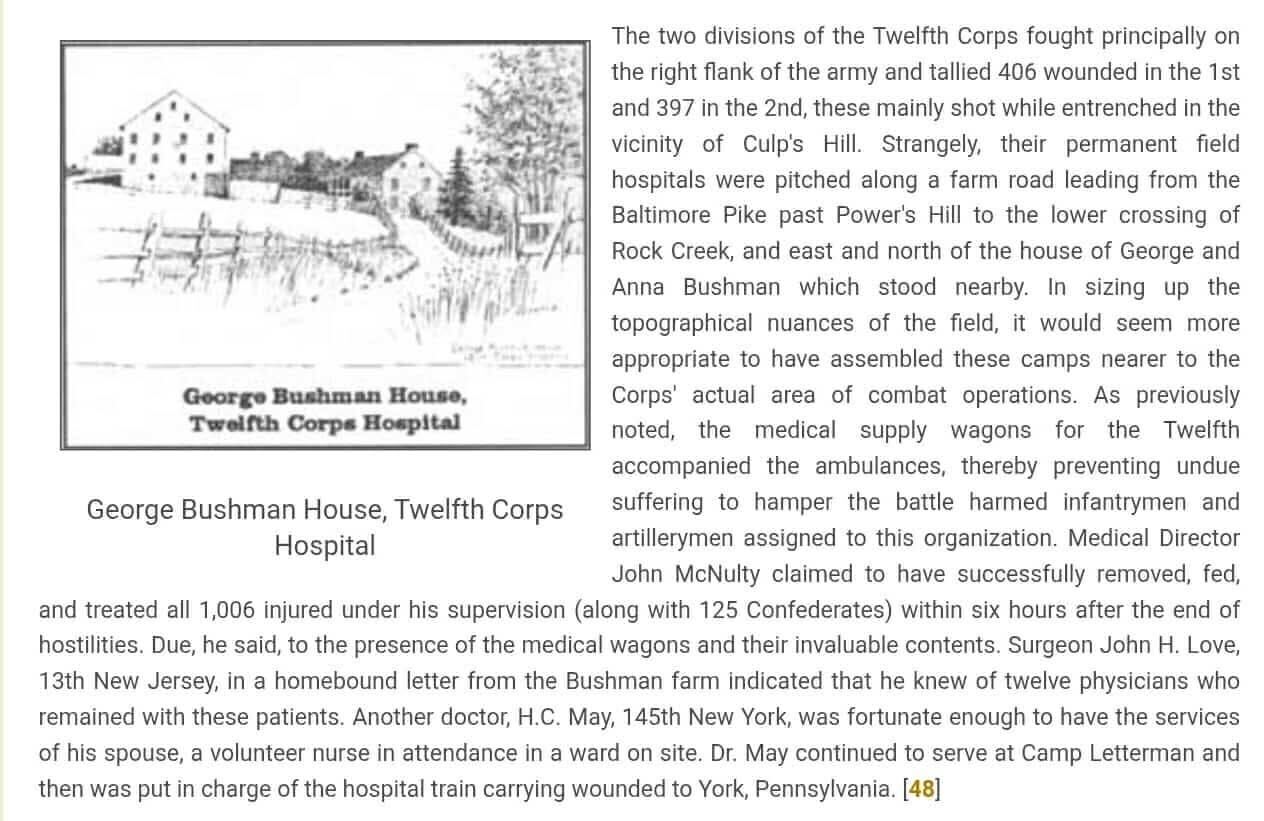
Illustration of the George Bushman House, used as the Twelfth Corps field hospital

George Bushman House, Twelfth Corps Hospital

George Bushman House, Twelfth Corps Hospital

During the Battle of Gettysburg the Twelfth Corps held the Union right flank near Culp's Hill, suffering heavy casualties in the fighting. With the field hospitals of the Corps pushed forward, the Bushman farmhouse — close to the lines and spacious enough for wards — was pressed into service.

Medical Director John McNulty assigned Surgeon John H. Love to oversee operations there. Wounded soldiers were brought in from the surrounding slopes and fields; the home's rooms became operating and recovery wards for the duration of the battle and the difficult days that followed.

Source: Historical records, U.S. Army Medical Department.

From the Archives

A selection of primary documents and records connected to the Bushman family and the property's early history.

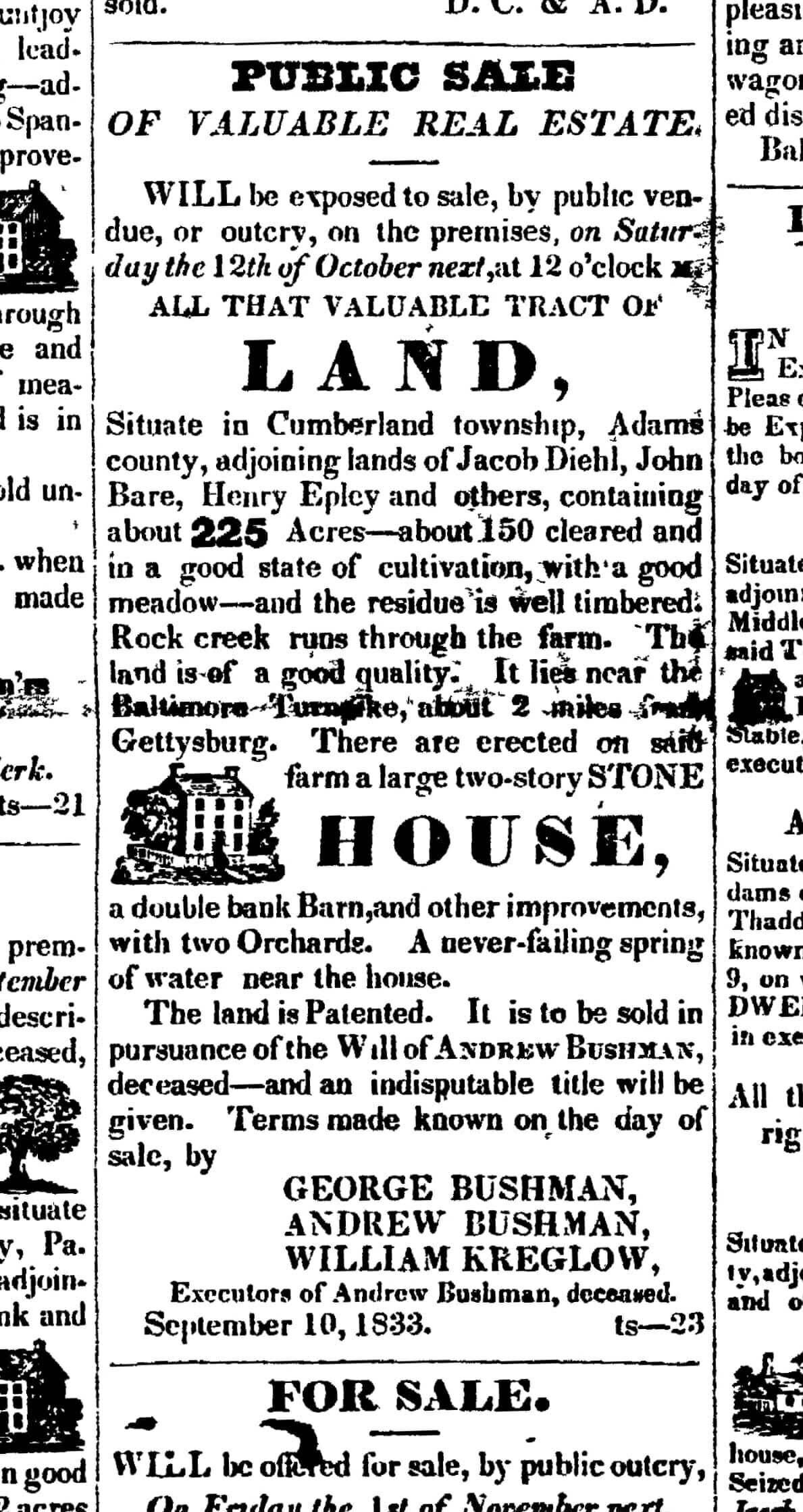
1833 public sale notice for the Bushman farm
1833 — Public Sale of the Bushman Farm
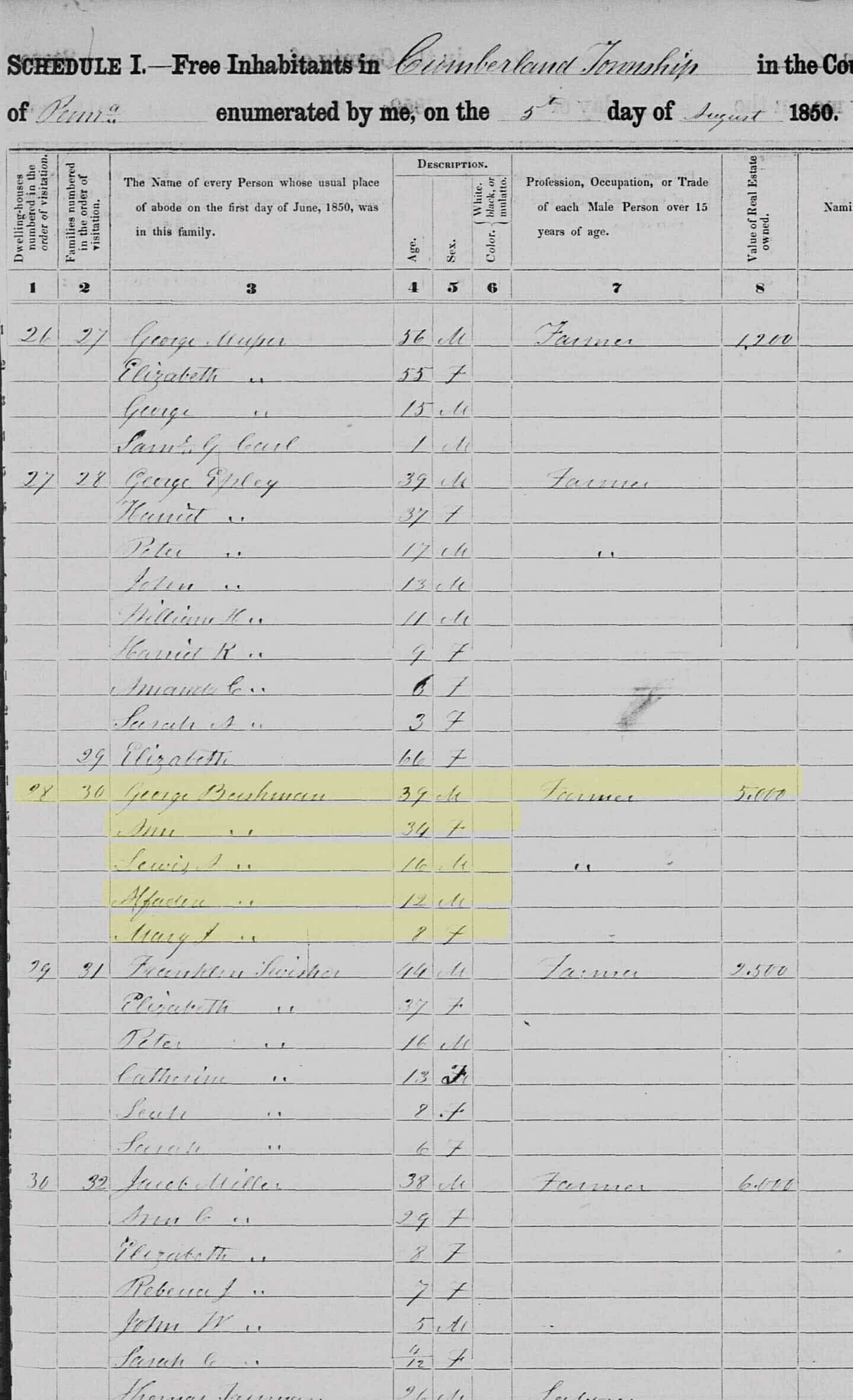
1850 U.S. Census record listing George Bushman and family
1850 Census — George Bushman, Farmer
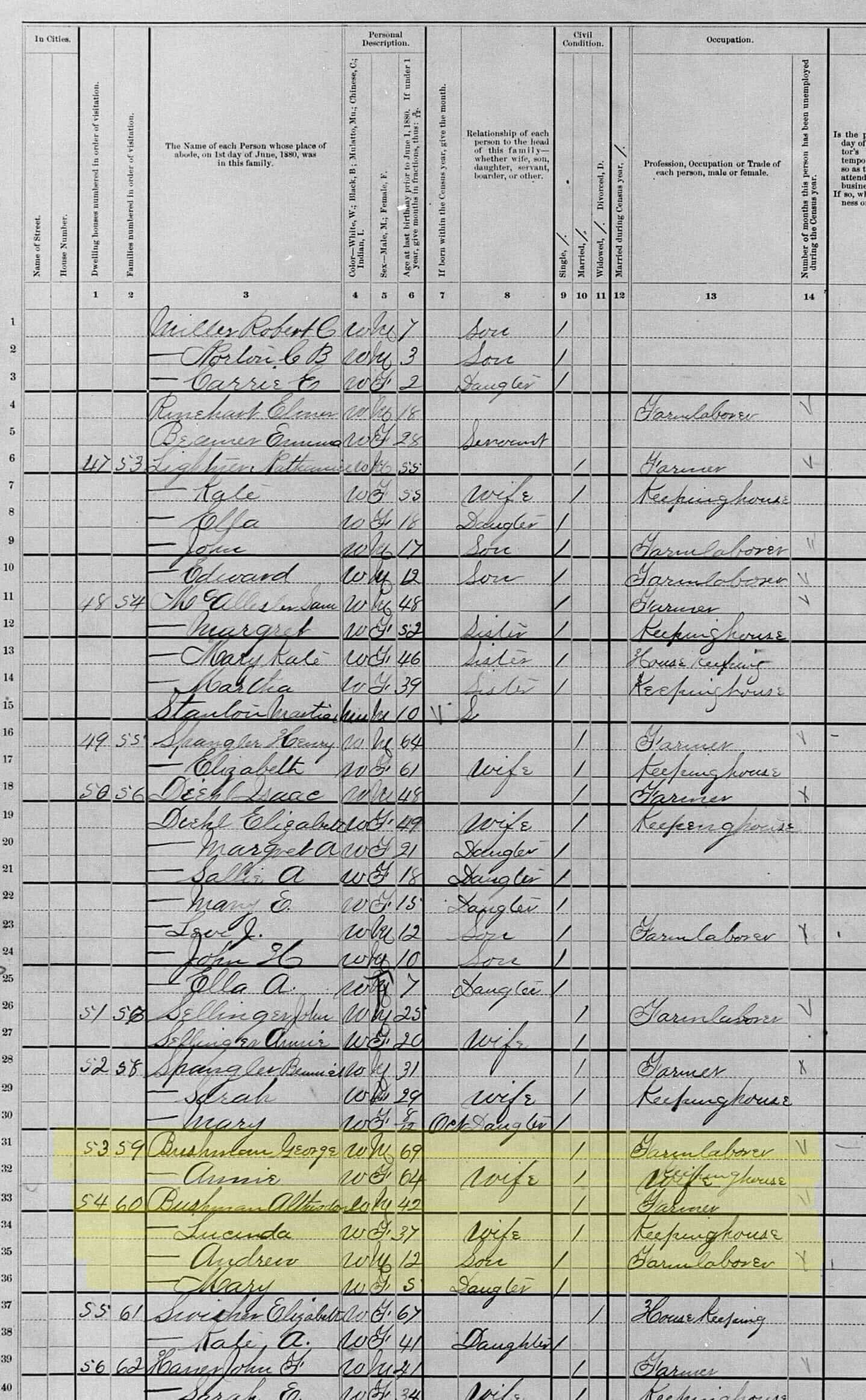
1880 U.S. Census record listing the Bushman household
1880 Census — The Bushman Household
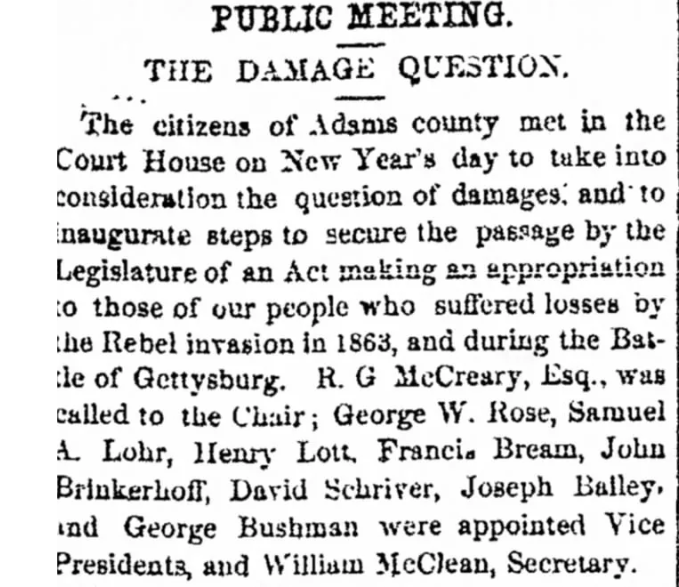
Newspaper notice of a public meeting on damage claims from the 1863 invasion
1864 — Public Meeting, The Damage Question
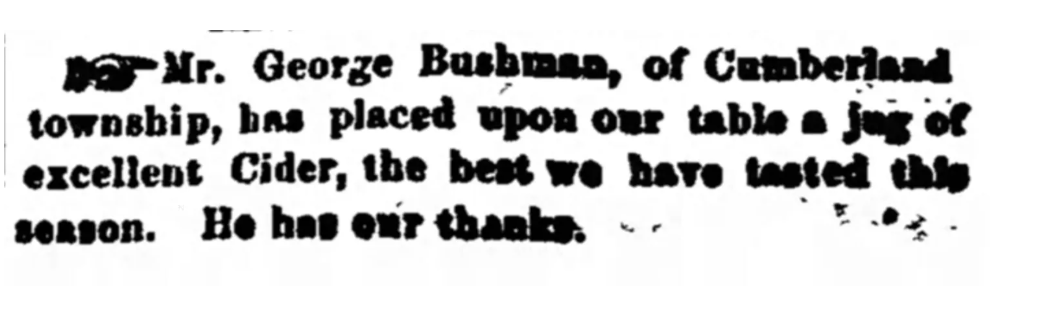
Newspaper note thanking George Bushman for a jug of cider
A Farmer's Gift — George Bushman's Cider
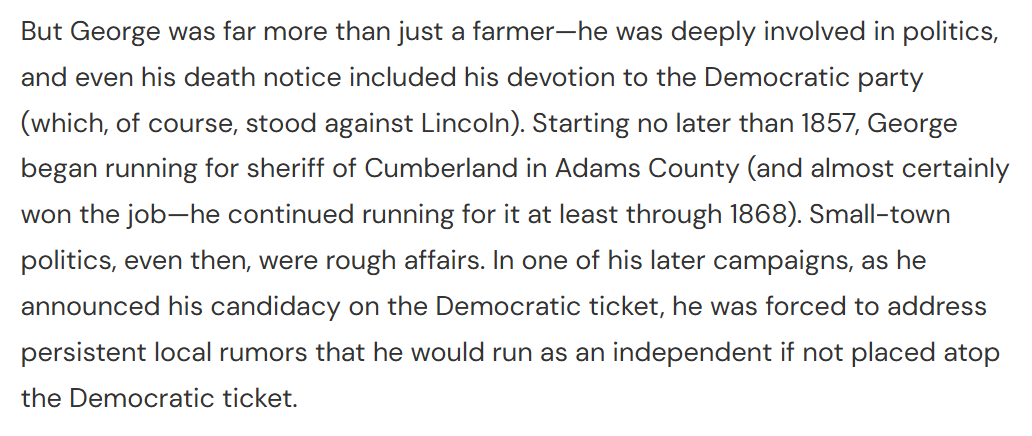
Note on George Bushman's political career in Adams County
George Bushman — Farmer & Politician
Anne, Baladerry Concierge

Anne

Baladerry Concierge

Anne, Baladerry Concierge

Hi, I'm Anne

I'm the inn's concierge. Ask me anything about our rooms, amenities, or event spaces — I'm glad to help.